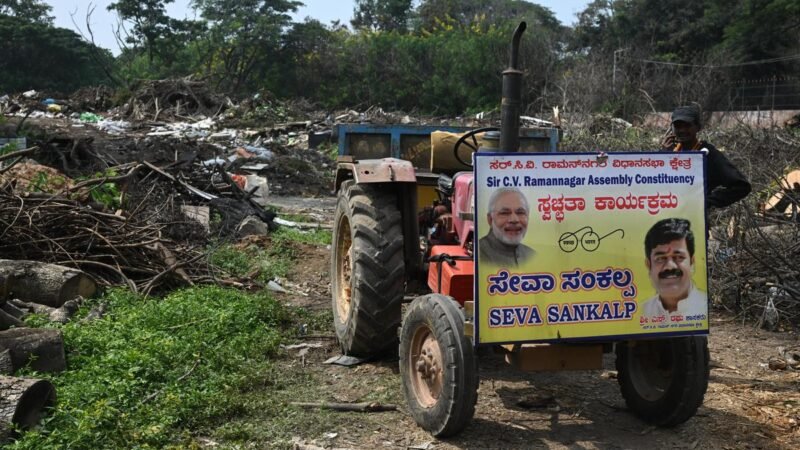
The Karnataka government has approved 21 garbage collection packages despite clear violations of the Karnataka Transparency in Public Procurement Act, 1999 (KTPI Act), and significant financial overruns. This decision stands in stark contrast to the government’s recent cancellation of eight tenders for nine flyovers under the B-Smile project, which were scrapped specifically for breaching the same KTPI regulations. The approval of the garbage tenders has drawn sharp criticism for ignoring procedural mandates and imposing an undue economic burden on the state exchequer.
The KTPI Act, 1999, its 2000 rules, and the KTPI Portal mandate that all procurement processes be conducted online and that the terms and estimated costs of published tenders remain immutable. However, none of these protocols were followed for the 21 garbage packages. The Managing Director of B-Smile, who is also the Managing Director of Bangalore Smart Water and Sanitation Limited (BSWSML), had previously submitted a proposal acknowledging the lapses in the B-Smile flyover tenders. Yet, the same official has defended the irregularities in the garbage tender process, creating a contradictory stance on compliance.
The Finance Department has issued a stern warning that accepting a premium of 14 percent, which far exceeds the permissible limit of 5 percent, violates financial rules. The department noted that the cost estimates for 2025 were incorrectly calculated, and the Urban Development Department has failed to provide documentation on the basis of these calculations or explain the sudden increase in costs within a single year. Furthermore, the minutes of the 21st board meeting of BSWSML are unavailable, and there is no clarity on whether the Administration Department sought the Finance Department’s opinion before finalizing the costs.
In a note dated May 7, 2026, the Finance Department stated that there is no justification for a high bid, especially since diesel rates have not changed, rendering the claim of increased fuel costs invalid. The department advised the Administration Department to limit the tender premium to 5 percent and to re-tender all packages if bidders do not accept this condition. The Finance Department warned that accepting a 14 percent premium by labeling rules as ‘unclear’ would set a dangerous precedent, encouraging other departments to violate budgetary norms.
The Karnataka High Court is currently hearing several cases related to primary and secondary garbage collection tenders, which have raised multiple questions about the procurement process. Chief Minister Basavaraj Bommai discussed these issues with the Additional Principal Secretaries of the Urban Development and Finance Departments. Subsequently, on May 21, the Chief Minister constituted a committee chaired by the Development Commissioner and the Additional Principal Secretary, including external experts and other officials, to comprehensively review the garbage tender process. However, the government’s decision to approve the tender with a 14 percent premium was made without considering the committee’s report.
BSWSML has also violated the general instructions issued by the Finance Department in order G.O. Works 6/8/2025. The Finance Department explicitly stated that a 10 percent service charge was not considered during the initial rate analysis for the tender estimate. The revised rates were compared with the original estimates to justify the additional costs only after the tender process was completed. The department described this post-hoc addition of the 10 percent service charge or Operation and Maintenance (O&M) cost as an attempt to retroactively justify the 14 percent tender premium.
In paragraph 9.15 of its report, the Finance Department clarified that it cannot accept justifications for increasing the tender estimate amount and adjusting to market rates after the bid closure. Making such changes to the financial estimate after bids are opened is contrary to established procedures and undermines the credibility of the initial cost justification. To maintain the transparency and integrity of the tender process, the financial valuation must be conducted based on the criteria and rates fixed prior to the publication of the tender.