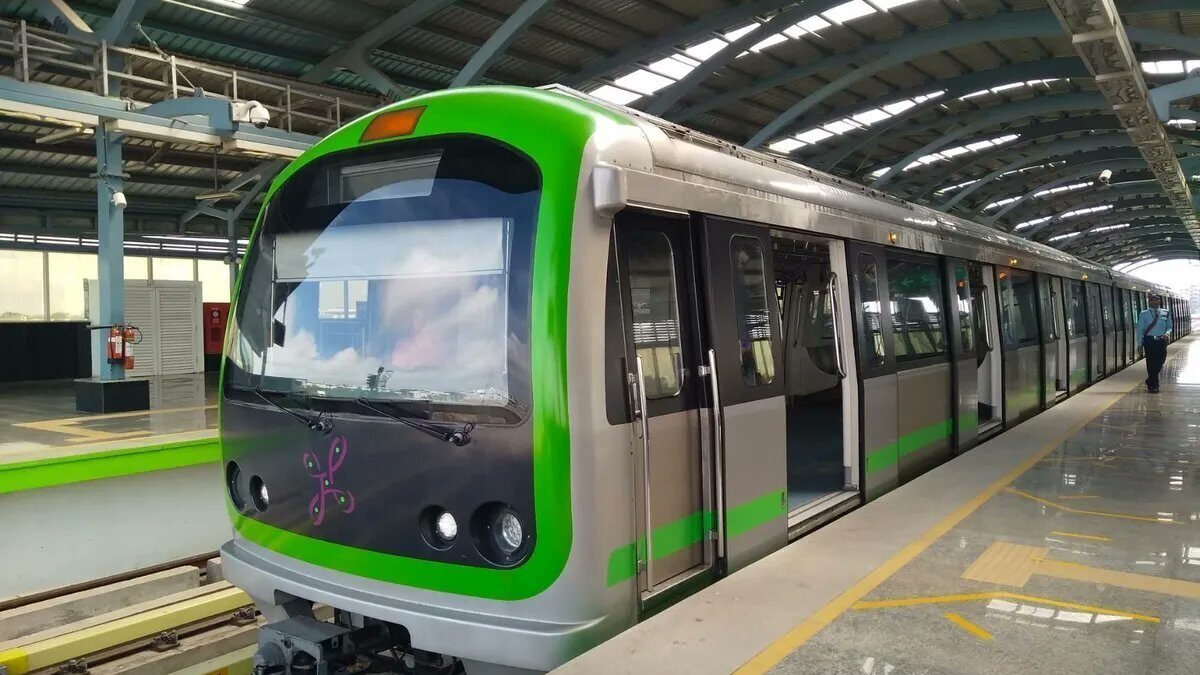
Residents of Bengaluru and Hosur have voiced strong support for extending the Namma Metro Yellow Line across state borders, citing severe traffic congestion on the highway. IT professionals, students, and auto drivers emphasized that the project is essential for easing daily commutes and reducing economic losses caused by delays. The public views this extension as the only lasting solution to the gridlock affecting the Bommasandra, Chandapura, and Attibele stretches.
Matthew, an employee at IT major Infosys, highlighted that the extension is critical for those living in Chandapura and beyond, who currently face significant travel difficulties. He noted that a direct metro link to Hosur would provide a faster and more convenient alternative to the congested roads. Similarly, student Chinmay stated that the service would drastically cut travel time for those commuting to colleges in Electronic City and other parts of Bengaluru, while also reducing the burden on public buses and private vehicles.
Local transport operators also see the project as a vital boost. Prabhu, an auto driver, explained that heavy congestion on the Attibele route makes even short distances time-consuming. Another driver, Prakash, argued that the extension must be implemented to improve interstate commercial connectivity between Karnataka and Tamil Nadu, facilitating easier travel for traders and people from rural areas.
The primary objective of the project is to enhance public transport connectivity for thousands of employees working in Bengaluru’s Electronic City, Bommasandra, and Hosur’s industrial belt. By reducing dependence on road transport, the initiative aims to strengthen links between the two industrial hubs and stimulate economic activity. The proposal first gained traction in 2022 when the Karnataka government allowed Tamil Nadu to conduct a feasibility study for a route initially estimated at 20.5 km, with 11.7 km in Karnataka and 8.8 km in Tamil Nadu.
In August 2024, the Chennai Metro Rail Corporation advanced the plan with a detailed feasibility report for an approximately 23-km extension via Attibele. This updated proposal envisions 12 km of track in Karnataka and 11 km in Tamil Nadu, featuring 12 stations and a depot, with an estimated cost of Rs 6,900 crore. Despite this progress, Karnataka IT and Biotechnology Minister Priyank Kharge raised concerns in 2023 that lower land prices and cost of living in Hosur could lure small industries and start-ups away from Electronic City, potentially affecting the state’s investment prospects. However, some industry association representatives did not share these apprehensions.
Technical challenges remain, with the Bangalore Metro Rail Corporation Limited (BMRCL) identifying issues related to power-system compatibility, route design, and station operations near the border. An alternative plan to extend the metro only to Attibele has also been considered. Meanwhile, Tamil Nadu Chief Minister C Joseph Vijay’s appeal to Prime Minister Narendra Modi has added political pressure to finalize the project, though approval still depends on resolving these technical and administrative hurdles.