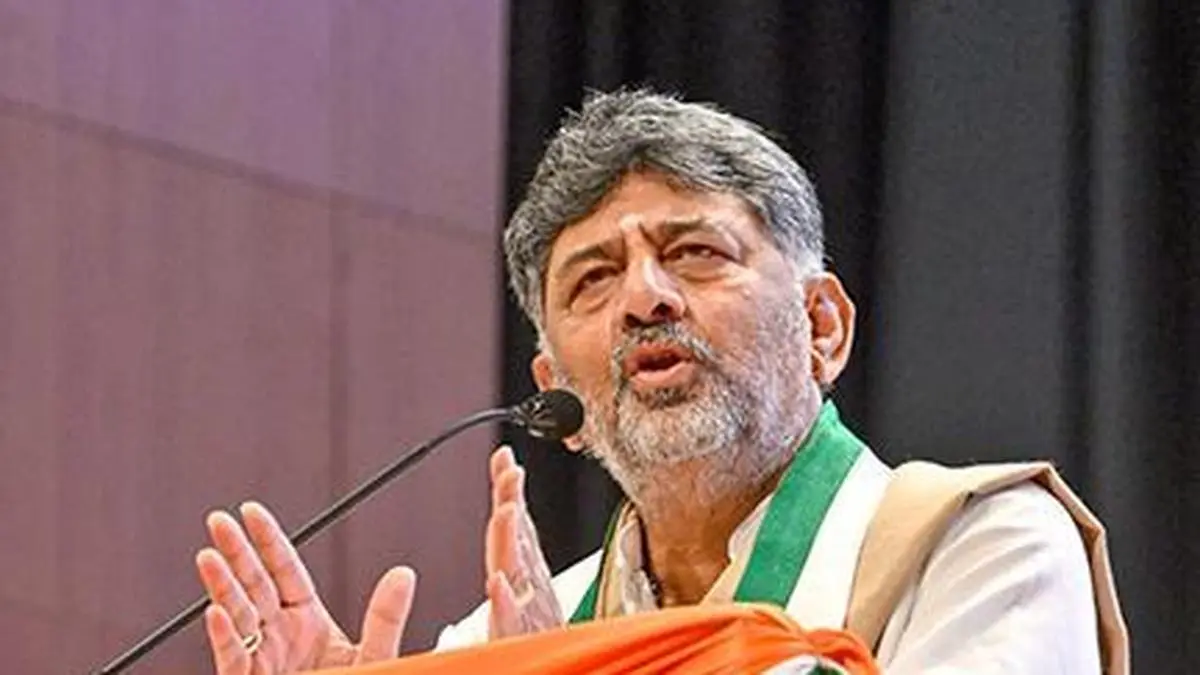
Karnataka Chief Minister D K Shivakumar has announced a comprehensive infrastructure strategy for Bengaluru, projecting an investment of approximately ₹1 lakh crore to address rapid urban growth and traffic congestion. Speaking to state legislators at his official residence, Krishna, on Tuesday, the Chief Minister emphasized that the city’s population and vehicle numbers are expanding at a faster rate than in other major Indian cities, while existing road capacity remains insufficient. The state government has therefore prioritized extensive road construction and public transport expansion as part of a 10-year development plan aligned with Bengaluru’s 500th anniversary in 2037.
The proposed road network includes a 40-km two-lane tunnel corridor, a 120-km elevated corridor, and the upgrading of 1,500 km of arterial and sub-arterial roads. Construction has already commenced on a two-km short tunnel at Hebbal. The 16.5-km North-South corridor is estimated to cost ₹17,780 crore, with the state government contributing ₹7,000 crore, while the 21-km East-West corridor will feature two entry points. The 120-km elevated corridor, planned under National Highway standards at an estimated cost of ₹23,165 crore, is divided into four categories, with segments shorter than 10 km designated as toll-free. Additionally, around 500 km of new road connections are planned, comprising 300 km of buffer roads along stormwater channels and 68 km of business corridor development. The 17-km Outer Ring Road is slated for redevelopment, and an 18-km white-topping project on the city’s outskirts will begin soon. Although the state proposed a 37-km double-decker road within the Outer Ring Road area, the Centre has approved only 11 km to date.
Shivakumar assured legislators that funds have been allocated equitably to every Assembly constituency in Bengaluru, with prompt releases available for urgent works proposed by MLAs. He highlighted substantial investments by the Bengaluru Development Authority (BDA) and the Bangalore Water Supply and Sewerage Board (BWSSB). Public transport expansion targets include increasing the Metro network from 96 km to 170 km by 2027, adding 4,500 buses to the current fleet of 7,000, and achieving 150 km of suburban rail connectivity by 2030. The Cauvery Stage-6 project will be undertaken to supply additional water to the city.
To alleviate pressure on the core city, the government plans to upgrade at least 65 urbanized gram panchayats outside the Greater Bengaluru Authority (GBA) limits into urban local bodies. These areas will receive phased drinking water and sewerage systems, along with prepared proposals for road upgrades. New garbage collection contracts will handle up to 9,000 tonnes of waste based on vehicle capacity, with mandatory GPS tracking for all collection vehicles and strict action against non-performing contractors.