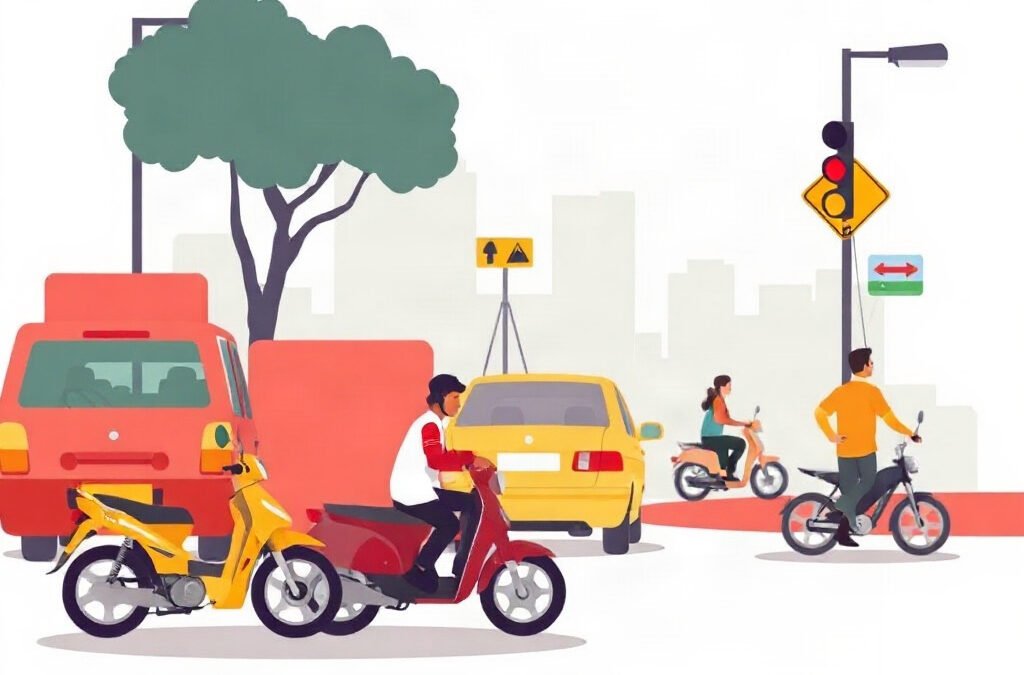
Traffic rule violations in Bengaluru have escalated sharply, with over 2.5 million cases registered in the last nine months. The most common offense is parking in no-parking zones, followed by signal jumping, reckless driving, and failure to wear helmets or seat belts. Other frequent violations include drivers of public service vehicles not wearing uniforms, operating without insurance or valid licenses, and parking on pedestrian walkways.
Data indicates a steady rise in violations, increasing from 1.93 million cases in 2021 to 2.109 million in 2025. This year, the number of cases has doubled within the first nine months. Specifically, 1.1 million cases related to no-parking zones were recorded in this period, the highest in the last decade. Previous annual figures show 1.116 million cases in 2025, 973,000 in 2024, 1 million each in 2023 and 2022, and 726,000 in 2021. Additionally, 1.16 million cases for parking on pedestrian walkways were registered by the end of August 2026.
Fines for parking in no-parking zones amount to ₹1,150, comprising a ₹500 penalty and a ₹650 towing fee. For cars, the fine is ₹1,000 with an additional ₹1,000 towing charge. Electric bikes and scooters account for the majority of violations, with allegations that delivery workers and scooter riders frequently break rules, contributing to accidents.
A traffic police officer noted that despite strict rules and heavy fines, violations are increasing daily, with erratic parking causing traffic congestion and endangering pedestrians. The officer stated that most Artificial Intelligence (AI) cameras installed in the city fail to effectively identify one-way traffic and unauthorized parking violations, except at major junctions and circles, leading to a surge in these offenses. Another officer emphasized that while awareness campaigns are ongoing, the high number of detected cases reveals a lack of compliance among vehicle users. The Intelligent Traffic Management System (ITMS) has been implemented, utilizing AI Automatic Number Plate Recognition (ANPR) cameras at junctions and circles to detect violations and impose fines.