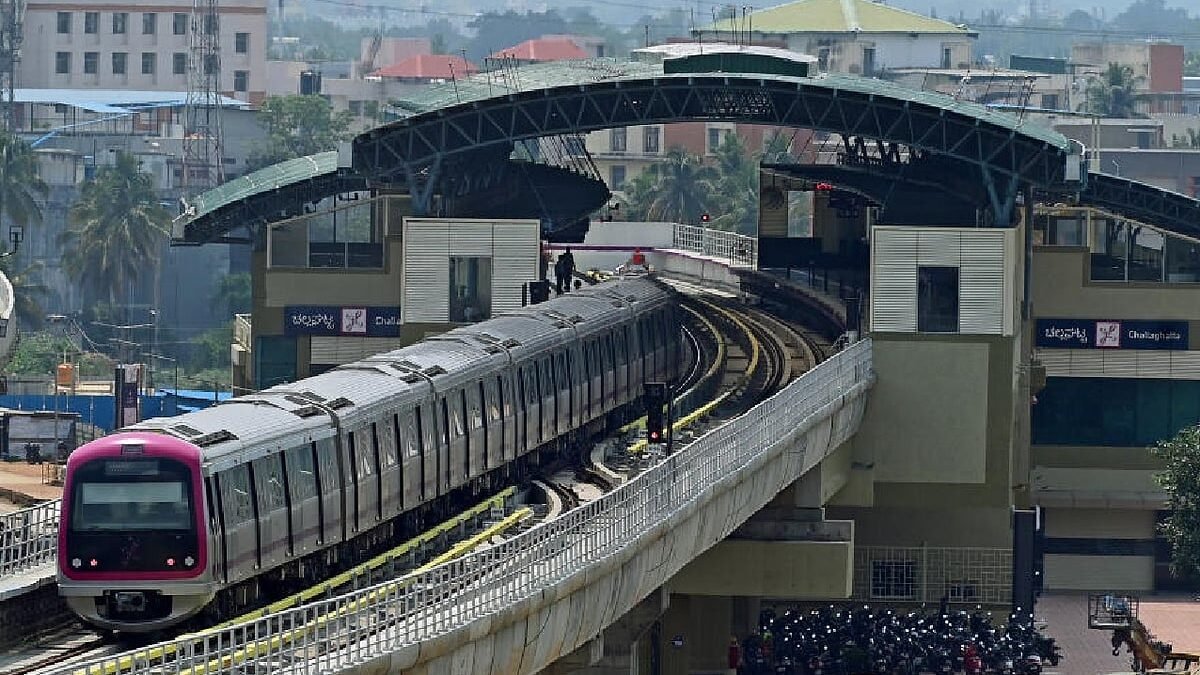
Bengaluru Metro Rail Corporation Limited (BMRCL) is undertaking a comprehensive overhaul of its first-generation rolling stock, which has been in operation for 15 years and covered over 10 million kilometers. The initiative aims to restore the trains to a condition that allows them to operate for another 10 years. The metro service began in 2011 on the Purple Line between MG Road and Baiyappanahalli with five trains, later expanding to the Green Line from Peenya to Sampige Road and the Purple Line from Magadi Road to Mysuru Road.
BMRCL officials stated that while the initial trains have reached the end of their design life, detailed technical inspections and capacity tests are currently underway at the Peenya and Baiyappanahalli depots. Most trains are found to be fit for service, requiring only the replacement of specific components. A team of BMRCL technicians is conducting detailed examinations of the mechanical, electrical, and safety systems, as many trains have exceeded 10 million kilometers despite being less than 15 years old.
This marks the first major mid-life comprehensive renewal for the city’s first-generation rolling stock, with 57 trains currently operating across the two lines. The process of adding new trains manufactured by the CRRC-Titagarh factory is also ongoing. Four new trains have already arrived, and 21 more are scheduled to join the Green Line in the coming period. Officials noted that the availability of additional rolling stock will allow BMRCL to temporarily withdraw older trains for maintenance without disrupting service, as the renewal will be carried out in phases rather than withdrawing all trains simultaneously.
An official highlighted the economic benefits, noting that purchasing a new six-coach train costs a minimum of ₹50 crore, whereas renewing an old six-coach train is estimated to cost ₹15 crore, resulting in savings of approximately ₹35 crore per train. B.L. Yashavant Chavan, Chief Public Relations Officer of BMRCL, explained that the detailed inspection will determine whether components are repaired or replaced based on their condition. The examination covers traction motors, running gear, electrical equipment, cables, batteries, wheels, axles, braking systems, doors, passenger safety features, air conditioning and ventilation units, signaling, control and electronic systems, passenger seating, interior fittings, and other critical safety mechanisms.